By: Bashir Rabe Mani in Sokoto
The Chairman of the Nigeria Union of Journalists (NUJ), Sokoto State Council, Comrade Usman Mohammed Binji, has urged journalists to uphold ethical and conflict-sensitive reporting as Nigeria approaches the 2027 general elections.
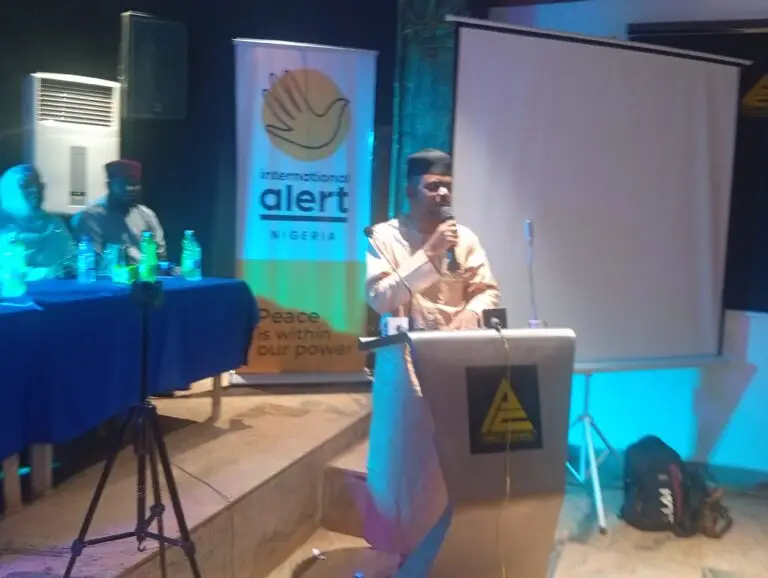
Binji made the call on Monday in Sokoto while presenting a paper titled “Hate Speech, Non-Violence, Shared Responsibility and Ethical Reporting During the Campaign Season” at an event organised by International Alert Nigeria to commemorate the International Day of Peace.
He said political campaigns are essential to democracy but warned that tension arises when campaigns are accompanied by hate speech, misinformation, ethnic and religious profiling and violence.
“The challenge is not to avoid difficult political stories, but to report them accurately, fairly and responsibly,” he said.
Binji explained that peace during election season goes beyond the absence of fighting, noting that positive peace entails justice, equality and the freedom of citizens to participate without intimidation.
Quoting Norwegian peace scholar, Johan Galtung, he said a peaceful democracy must allow strong criticism, investigation and accountability.
The NUJ Chairman clarified the distinction between hate speech and critical journalism, citing the United Nations Strategy and Plan of Action on Hate Speech launched on June 18, 2019.
According to him, criticism of government policies, public officials and governance failures based on facts remains legitimate journalism.
“Hate speech becomes a concern when communication moves from criticism of policies to attacking people because of who they are, particularly through ethnic or religious stereotyping, dehumanisation, collective blame and incitement to hostility or violence,” he said.
He warned against ethnic and religious profiling, stressing that individual responsibility should not automatically become collective responsibility.
Binji, who referenced the non-violence philosophy of Mahatma Gandhi, said political disagreement is normal in democracy, but violence is not, urging media professionals to avoid glorifying violence or amplifying language that could provoke retaliation.
He further tasked journalists to verify information before publication, distinguish facts from allegations, avoid sensational headlines, protect vulnerable sources and promptly correct errors.
On misinformation, disinformation and Artificial Intelligence (AI), Binji cautioned that fabricated audio, photographs and videos could appear authentic, and stressed that speed must never replace verification.
He noted that peaceful political communication is a shared responsibility involving political parties, journalists, citizens, security agencies and civil society.
“As Nigeria approaches the 2027 elections, media organisations must strengthen fact-checking, political parties must enforce internal rules against hate speech, and campaigns must focus on policies and records rather than ethnic and religious identities,” he added.
Binji concluded that disagreement is part of democracy, but must not degenerate into hatred or violence.
“We must remain fearless but responsible; critical but fair; independent but accountable. Let our reports inform rather than inflame,” he said.(Global News Guru)