Health experts have raised concerns over the rising number of kidney disease cases in Nigeria and across the world, despite improvements in treatment outcomes in some health facilities.
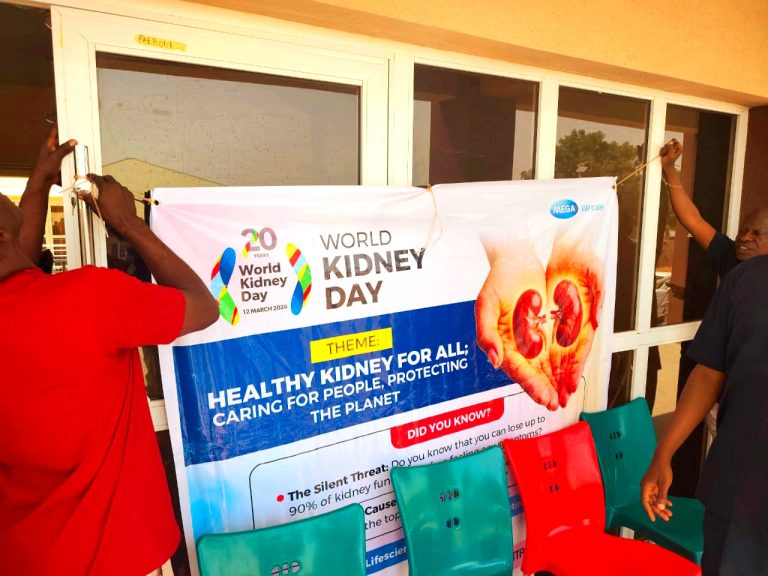
The warning comes as the global community marks World Kidney Day, an annual awareness campaign focused on prevention, early detection, and equitable access to treatment for kidney diseases.
Globally, kidney disease has become a major public health concern. Health data indicates that about 10 percent of the world’s population—more than 850 million people—are living with some form of chronic kidney disease, with many unaware of their condition until it reaches an advanced stage.
Experts say the situation is equally alarming in Nigeria, where about 10 percent of the population—roughly 24 to 25 million people—are estimated to be living with kidney disease, placing a significant burden on the country’s healthcare system.
At the Federal Teaching Hospital Gombe, nephrologists say there are signs of progress in the management of the disease.
A nephrologist at the hospital, Dr. Alaya Abdulrashid, said improved treatment and early diagnosis have helped many patients avoid reaching the most severe stage of the illness.
> “In Gombe State, about 60 percent of patients are now able to avoid progressing to the dialysis stage, which represents significant progress in treatment and early management,” he said.
However, he warned that the overall number of people developing kidney-related problems continues to rise, describing the trend as worrying.
Dr. Abdulrashid noted that conducting local studies to determine the exact burden of kidney disease in the region remains difficult due to the large number of patients referred from across the North-East.
Health professionals say the growing number of patients reflects broader national and global trends.
A nephrology nurse at the hospital, Barnabas Buba, identified hypertension, diabetes and unhealthy lifestyle practices as major causes of kidney failure.
In our facility alone, we receive an average of about 20 patients daily seeking care for kidney-related problems,” he said.
Medical experts say these risk factors account for a large percentage of kidney disease cases worldwide. Studies show that about 40 percent of people with diabetes and around 20 percent of people with hypertension eventually develop chronic kidney disease.
Another nephrologist at the hospital, Dr. Abubakar Sadik, noted that access to dialysis remains a major challenge for many patients due to the high cost of treatment, making support from government and philanthropists essential.
Meanwhile, the Chairman of the National Association of Nigerian Nurses and Midwives at the hospital, Inuwa Salihu Mshelia, commended philanthropist Usman Bello Kumo for providing free dialysis support to kidney disease patients throughout the year 2025.
He called on other well-meaning individuals in Gombe and beyond to emulate the gesture in order to ease the financial burden on patients undergoing dialysis treatment.
Mshelia also urged members of the public to protect their kidney health by drinking adequate water, avoiding self-medication, and seeking medical attention early when symptoms arise.
As part of activities marking World Kidney Day, nephrologists at the hospital organized a health talk with patients, where they highlighted preventive measures and the importance of early screening.
However, the experts lamented inadequate funding, describing it as a major challenge affecting awareness campaigns and early screening programmes aimed at tackling the growing burden of kidney disease in the region.
The theme for this year’s World Kidney Day is “Kidney Health for All: Caring for People, Protecting the Planet.”
Health professionals say that with early screening, healthy lifestyle choices and improved access to treatment, many cases of kidney failure can be prevented or effectively managed.(The daily fact)