By: Aishatu Shalangwa
The Nigeria Union of Journalists (NUJ) and the Independent Corrupt Practices and Other Related Offences Commission (ICPC) have renewed their commitment to strengthening media collaboration in the fight against corruption, just as stakeholders have called for a strategic shift from sensationalistic reporting to prevention-focused journalism.
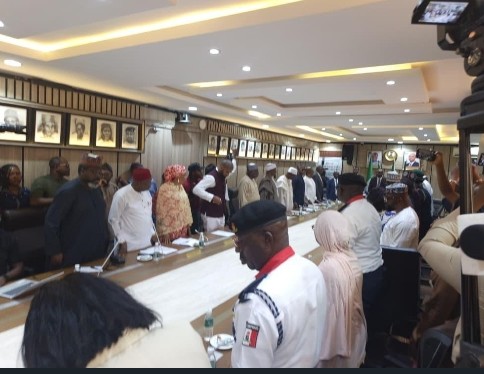
The resolutions emerged from two major events held in Abuja: the second edition of the ICPC/NUJ Media Summit and a one-day workshop reviewing the National Anti-Corruption Strategy (NACS) 2022-2026.
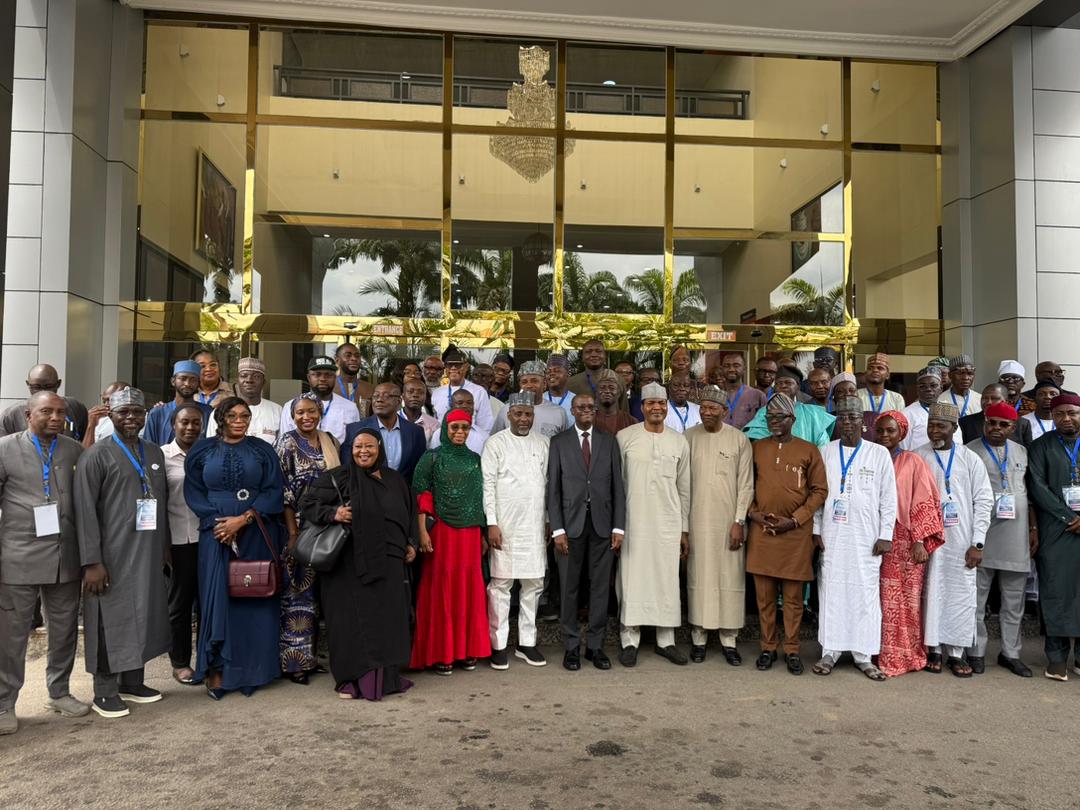
The Media Summit, held on March 26, 2026, at Rock View Hotel, Abuja, brought together journalists from all 36 states and the Federal Capital Territory.
The one-day event, supported by the MacArthur Foundation, with the theme: Re-invigorating the National Anti-Corruption Strategy 2022-2026): A Post -Assessment Roadmap for the Fourth Estate,focused on strengthening synergy between the media and anti-graft agencies.
In his remarks, the National President of the NUJ, Comrade Alhassan Yahya, described the media as the “critical watchdog” of society. He noted that the summit, which followed the inaugural edition in 2024, has become an essential platform for equipping journalists with investigative skills while upholding ethical standards.
“The presence of journalists from every state of the federation shows the importance we attach to this collaboration,” Yahya said. “With the support of the MacArthur Foundation, we are building a corps of reporters who understand the legal frameworks, digital tools, and safety protocols required for impactful anti-corruption reporting.”
The ICPC Chairman, Musa Adamu Aliyu, in his speech, underscoring the need for a mutual relationship between the commission and the press. He commended the NUJ for sustaining the initiative and urged journalists to remain vigilant, disseminate factual reports.
Noting that, "the fourth estate of the Realm is not a Stakeholder, but a cornerstone of the National Anti-Corruption Strategy"
“Corruption evolves, and so must our strategies to combat it. The media provides the eyes and ears we need to stay ahead,” Aliyu stated. “This summit is not a one-off event; it is part of a sustained capacity-building effort to ensure that the fourth estate of the realm performs its role effectively.”
Representing the Director,MacArthur Foundation, Comrade Alhassan Y. Abdul, a key partner in the initiative, Professor Umaru Pate reiterated the foundation’s commitment to supporting independent journalism in Nigeria. “A free and professional press is indispensable for transparency and accountability. We are proud to stand with the NUJ and the ICPC in this important endeavour,” he said.
Participants engaged in panel discussions and breakout sessions covering data-driven investigative reporting, digital security for journalists, and the role of whistleblowers in exposing corruption.
Meanwhile,in a communiqué issued at the end of the session, participants observed that corruption cannot be defeated through prosecution alone but requires a fundamental focus on systems, culture, and transparent conduct.
While the NACS 2022-2026 was praised as a robust central policy framework, the communiqué noted a persistent visibility gap between policy implementation and public perception, driven by weak agency coordination, limited public awareness, political interference, and slow judicial processes.
A key observation was that the media remains underutilised in the “Prevention” pillar of the strategy, with reporting often tilted toward sensationalist coverage of arrests rather than exposing systemic loopholes that enable corruption.
To address this, the workshop resolved that anti-corruption agencies should establish dedicated “Media Desks” to provide journalists with real-time, non-classified data, fostering evidence-based reporting. Participants also called for specialised training programmes to equip journalists with skills in public financial management, ethics, and integrity compliance.
“The media are not just observers in the anti-corruption crusade but catalysts of reform,” the communiqué stated, adding that journalists and whistleblowers should be given stronger legal protection and incentives.
The workshop further urged the media to champion “prevention-first” advocacy by highlighting successful institutional reforms and exposing vulnerabilities in public procurement processes before breaches occur—a shift toward solution journalism and developmental reporting.
At the close of the Media Summit, a communiqué was issued calling for stronger legal protections for journalists, increased access to public information, and the establishment of a media-anti-corruption task force to facilitate ongoing collaboration.
To ensure sustained implementation of the NACS roadmap, a tripartite monitoring committee comprising government, the media, and civil society organisations is to be formed to conduct quarterly reviews up to 2026.
Participants commended the ICPC and other key stakeholders for their commitment and professionalism while appealing to the Federal Government to adequately fund anti-corruption agencies to prevent systemic setbacks caused by paucity of funds.
“For the National Anti-Corruption Strategy to succeed, the media must investigate fearlessly, report responsibly, educate citizens, and hold power accountable,” the communiqué read.
The summit and workshop were attended by journalists, editors, media executives, and representatives of civil society and development partners, all reaffirming their commitment to a corruption-free society .
There was Keynote Lectures by Professor Umaru Pate, goodwill messages, and event ended up with Questions and Answers Session, as well as a Group Photograph.
(NUJ NATIONAL)